
How to Price Your Home to Sell in Rochester MN

Here's the short answer: price your Rochester home against recent, truly comparable sales in your neighborhood, not against a number you saw online or a figure you wish were true. Get that starting point right, factor in your home's real condition, and you'll draw serious buyers from the first week instead of chasing the market downward after a slow month.
I'm Pete Dokken, and I've walked a lot of Rochester sellers through this exact decision. The sellers who do well almost always do the same few things: they pull real comps, they're honest about their home's condition, and they price for the market they're actually in, not the market they remember from a few years back. Let's walk through how to do that for your home.
Why does pricing matter more than almost anything else you'll decide?
Your list price sets the tone for everything that follows. Price too high and you'll sit on the market while buyers quietly skip past your listing for something that looks like a better deal. Price too low and you leave money on the table that you can't get back once the home is under contract. Price it right, and you create competition among buyers instead of waiting around for one.
Buyers today compare homes online before they ever step inside one. If your price doesn't match what they've seen for similar homes nearby, they move on without a second thought. That's why the comp work has to come before the sign goes in the yard, not after.
What actually drives home values in Rochester?
A few things shape what buyers are willing to pay in Rochester, and they're worth understanding before you settle on a number.
Mayo Clinic is the city's largest employer, and that steady base of jobs keeps a reliable stream of buyers moving into town throughout the year. Many of them are relocating for work on a timeline, which affects how they shop and how quickly they're willing to make a decision. Beyond that, your home's specific location, its condition, and how much inventory is available in your price range at the moment you list all play a real role in what it's worth.
How do Mayo Clinic relocations affect local demand?

Mayo Clinic regularly brings in physicians, researchers, and staff from outside the area, and a lot of them need housing fairly quickly after accepting a position. These buyers often work with relocation packages and tight timelines, so they tend to move fast once they find a home that fits. That demand is strongest for move-in ready homes close to the medical campus, and it tends to soften for homes that need work or sit farther from the center of town.
Why do online home value estimates miss the mark?
Automated estimate tools pull from public records and broad algorithms, and they simply can't see what's inside your walls. They don't know you replaced the roof two years ago, and they don't know your basement has water stains. They also can't tell a fully updated kitchen from one that hasn't changed since the 1990s. An estimate built without a walkthrough is a guess dressed up as data, and it's often off by a meaningful amount in either direction. A real pricing conversation starts with someone actually looking at your home.
How do you find and use comparable sales the right way?
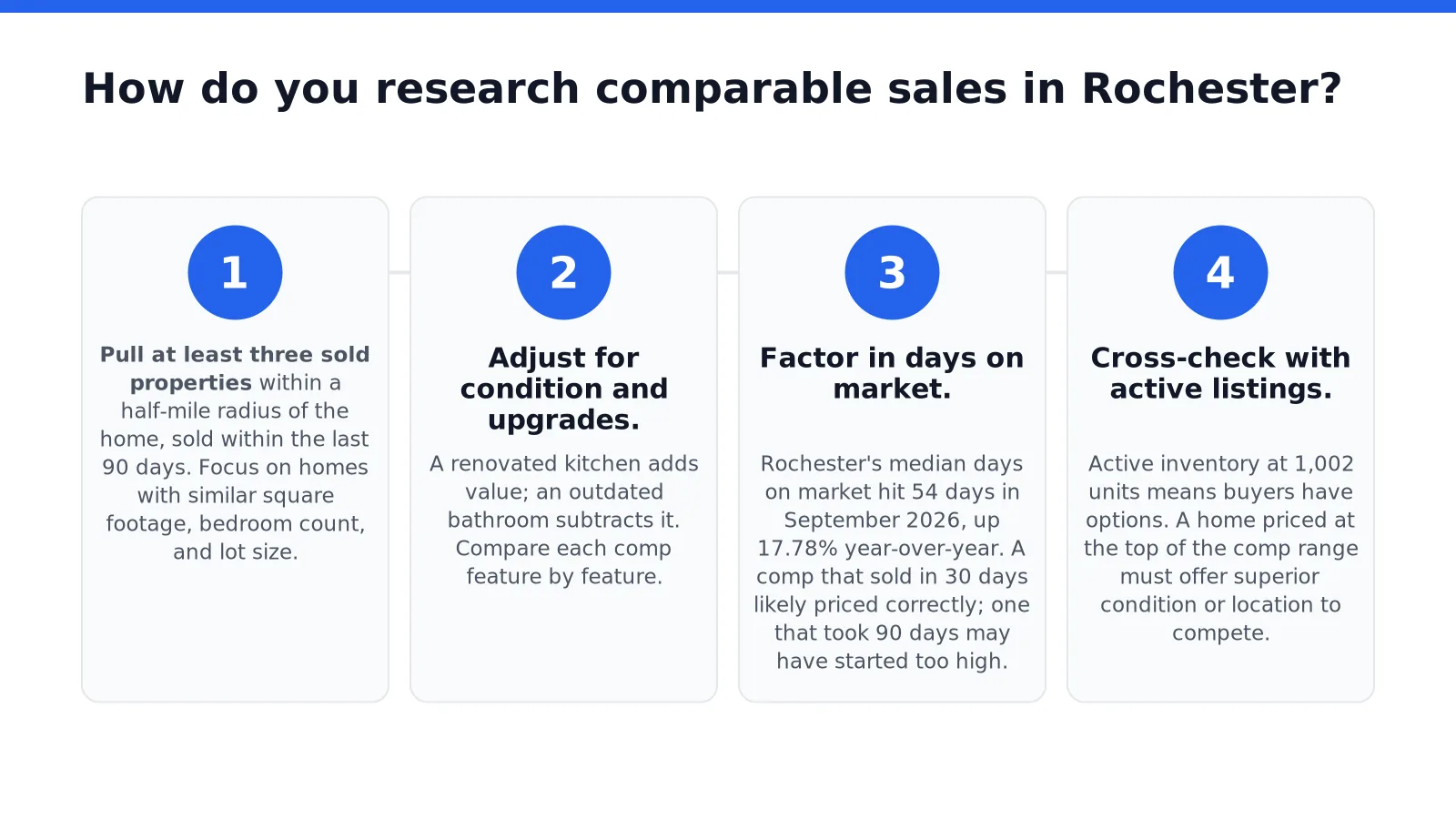
Comparable sales, or "comps," are the backbone of an accurate price. A comp is a home similar to yours in size, condition, and location that has actually sold recently, not one that's merely listed for sale.
Here's how I walk sellers through building a solid comp set:
- Start with homes in your own neighborhood. A home two miles away in a different school district or a different price tier doesn't tell you much about your street.
- Look at closed sales from the last few months, not the last few years. The market moves, and older sales stop being reliable the longer they sit.
- Match on size, bedrooms, and lot characteristics. A 1,200 square foot rambler and a 2,600 square foot two-story aren't telling the same story.
- Adjust for condition. An updated kitchen or finished basement adds value; deferred maintenance subtracts it. Be honest about where your home falls.
- Note how long each comp sat before selling. A home that sold quickly was likely priced well. One that lingered for months probably started too high and had to be chased down.
Why does condition change the number more than people expect?
Two homes on the same block can be worth noticeably different amounts once you factor in condition. Fresh paint, updated flooring, and a well-kept exterior tell a buyer the home has been cared for, and buyers pay for that confidence. A home with visible deferred maintenance signals future expense, and buyers mentally subtract for every repair they can see. Before you set a price, walk through your home the way a buyer would and be honest about what needs attention.
Does the neighborhood matter more than the city average?
It matters more than almost anything else. Rochester isn't one market, it's a collection of smaller ones. Homes near the Mayo Clinic campus and downtown tend to move differently than homes in newer developments on the edges of town, and established neighborhoods with mature trees and larger lots often hold value differently than newer subdivisions. Pricing off a citywide average instead of your specific neighborhood is one of the most common mistakes I see sellers make.
How much does the time of year affect pricing?
Seasonality is real in Rochester. Spring and early summer typically bring more buyers into the market, including families timing a move around the school year, which can support a stronger price and a faster sale. Fall and winter tend to bring fewer buyers out, but the ones who are looking are often more serious, including relocating professionals working against a start date. Your price doesn't need to change dramatically by season, but your expectations around timeline should.
What happens at each price point?
This is the part sellers underestimate. The price you choose doesn't just affect your sale price, it changes how buyers behave toward your listing from day one.
| Pricing Approach | What Buyers See | Likely Outcome |
|---|---|---|
| Priced too high | Looks overvalued next to similar homes nearby | Fewer showings, longer time on market, eventual price cuts that can make the home look stale |
| Priced right | Matches what similar homes have actually sold for | Strong early showings, competitive offers, a smoother path to closing |
| Priced too low | Looks like a deal, sometimes too good to be true | Fast interest, but the seller risks leaving real money on the table |
The middle row is the goal every time. It's not about splitting the difference between "too high" and "too low," it's about doing the comp work carefully enough that you land there on purpose.
Your home pricing checklist
Before you settle on a list price, work through this list:
- Pull closed comparable sales from your specific neighborhood within the last few months.
- Walk your home like a buyer would and note anything that needs repair or updating.
- Compare your home's size, layout, and lot to your closest comps, not the city as a whole.
- Check how long your comps sat on the market before they sold.
- Consider the season you're listing in and adjust your timeline expectations, not necessarily your price.
- Think about who's likely to buy your home, a relocating Mayo Clinic employee, a growing family, a downsizer, and price with that buyer in mind.
- Get a second opinion from a local agent who knows your specific neighborhood before you finalize the number.
- Avoid leaning on an online estimate as your starting point.
Frequently Asked Questions
How do I know if my home is priced too high?
If you're getting very few showings in the first couple of weeks, or the showings you do get don't lead to any offers, your price is likely out of step with what buyers are seeing elsewhere. Pull a fresh set of comps and compare your home honestly against them.
Should I price my home based on what I need to walk away with?
It's an understandable instinct, but buyers don't care what you owe or what you hope to net. The market only responds to what comparable homes have actually sold for, so your personal number and your list price need to be two separate conversations.
How many comps do I really need?
Three to five solid, recent comps from your immediate neighborhood is usually enough to see a clear pattern. Fewer than that and you're guessing; more than that and you can usually find a tighter, more relevant set instead.
Does staging actually affect price, or just how fast a home sells?
Staging and basic prep mostly affect speed and buyer perception, but the two are connected. A home that shows well tends to get stronger early offers, which often means less negotiating room lost to price cuts later.
What if I want to sell quickly rather than get the highest possible price?
That's a completely reasonable goal, and it changes the strategy. Pricing at or slightly under the honest comp value will typically generate faster interest and a quicker close, as long as you go in understanding that trade-off up front.
Thinking about listing your Rochester home?
Pricing a home well takes more than a quick look at a website estimate. It takes a real walkthrough, a careful look at recent sales in your specific neighborhood, and an honest read on your home's condition and the season you're selling in. If you'd like a second set of eyes on what your home is actually worth, reach out to Pete Dokken Home Advisors for a free, no-pressure home value review. No obligation, just a straight answer about where your home stands in today's market.
Categories
Recent Posts